349: Amnesty. Flamingo Revolution. Torricelli Mountains.
This achievement belongs to everyone.

Hi everyone, Gus here. Earlier this week, I sat down with Pardis Sabeti, a Harvard geneticist who has spent two decades building systems to catch pandemics before they start. We wanted to know what she knows about the Ebola outbreak that’s happening right now in the Democratic Republic of Congo, already the second-largest in the disease’s 50-year history and the fastest-growing on record.
It didn’t have to be like this. Sabeti and her longtime collaborator, Christian Happi, built Sentinel on a simple premise: most “emerging” diseases aren’t emerging, they’re just not being tested for. In 2014, the diagnostic labs they’d built in Sierra Leone and Nigeria for Lassa fever caught Ebola before almost anyone else in the world. Last year, Sentinel helped Rwanda contain a Marburg outbreak with a fatality rate that was less than half the historical average.
This time though, it’s been different. Conflict, the collapse in global health funding, and the withdrawal of international peacekeepers created exactly the kinds of conditions outbreaks thrive in. Sabeti’s own team lost a large share of its staff to funding cuts last summer, months before the DRC outbreak took hold.
Some of what she told us is unsettling, some of it is reassuring. There are still thousands of scientists and health workers around the world working on ways to catch the next big pandemic early. And after 18 months of losing ground, their network recently got its biggest boost yet. In November, Sentinel won $100 million from the MacArthur Foundation, its first major infusion since the cuts hit.
Here’s my conversation with her.
This week’s top stories
Global emissions are flattening. Climate TRACE, which tracks millions of emission sources using satellite and AI, estimates that global greenhouse-gas output in May 2026 was 5.0 billion tonnes of CO₂-equivalent, down 0.1% on a year earlier. The year to date is essentially flat. Climate TRACE
Türkiye votes in favour of amnesty to end its 40-year war. On Monday this week, Türkiye’s Parliament passed a law (with almost 80% support) offering conditional amnesty offering conditional pardons and legal protections to thousands of rank-and-file members of the Kurdistan Workers’ Party, in return for full disarmament. This builds on the ceasefire that saw the group lay down its arms last year. The insurgency, one of the world’s longest, has killed tens of thousands across Turkey, Iraq and Syria since 1984. Bloomberg / WSWS
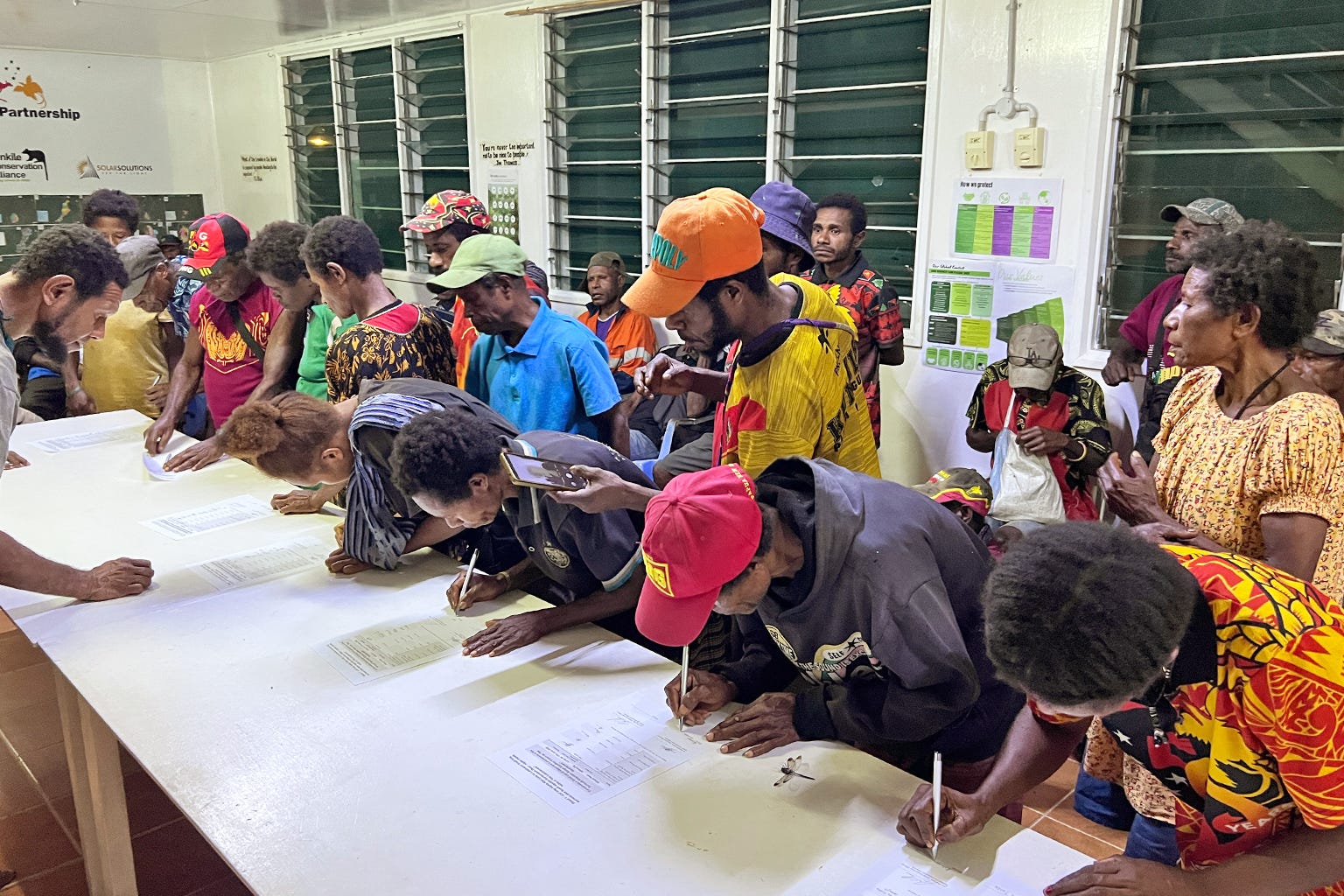
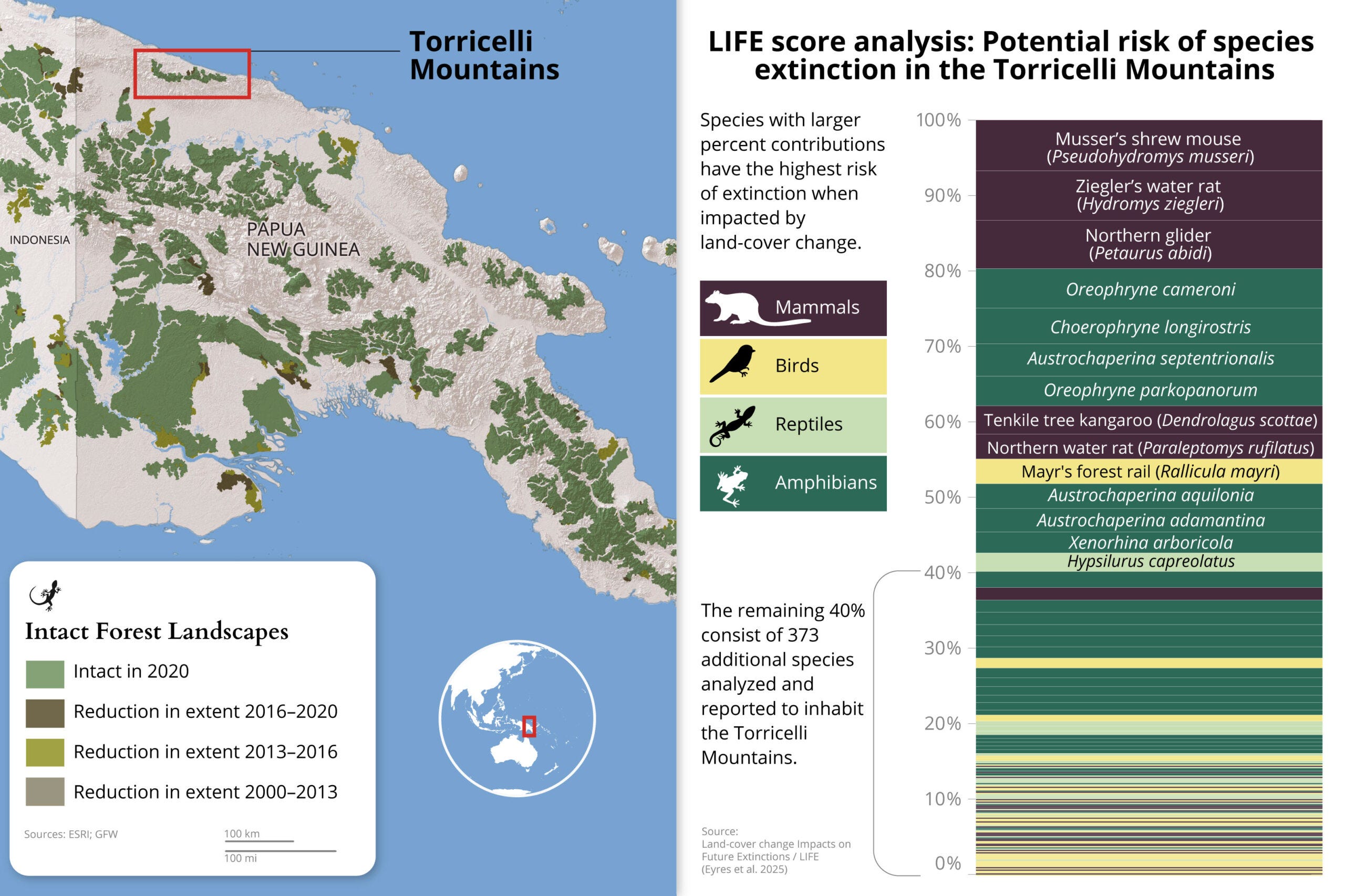
An extraordinary pocket of biodiversity gets protection in Papua New Guinea. The rainforests in Papua New Guinea’s Torricelli Mountains are home to a staggering array of species, an estimated 4% of the world’s biodiversity, which is ridiculous, given the entire range is 1,250 km², about the size of the city of Los Angeles. Previously, it was in danger of being logged, which would have been a depressing fate for such a remarkable place, but now Papua New Guinea clans have signed a binding deed to save their forest. On 30 June, 266 clan leaders from 41 villages in the Torricelli Mountains signed a legally binding conservation deed that bans commercial logging, mining and the hunting of threatened species. Mongabay
Africa’s home-grown payments network is expanding. Historically, a payment from Kenya to Nigeria had to be converted to US dollars, routed through a New York bank, and then get converted again — costing days, handling fees on both ends, and roughly $5 billion a year across the continent in avoidable FX charges. The Pan-African Payment and Settlement System solves that by cutting the dollar out of the middle and moving money across the continent in seconds, in local currencies. Kenya pays in shillings, Nigeria receives naira, and the central banks settle without American banks getting their grubby little paws on any of it. The newest member is the Bank of Central African States, serving 72 million people across six countries (Cameroon, Chad, Gabon, Equatorial Guinea, Republic of Congo, Central African Republic). Afreximbank
Easter Island’s people take command of their sea. The Rapa Nui community has locked in funding, patrols and research for the 700,000 km² Te Moana Tapu a Hotu Matu’a reserve, one of the largest marine protected areas anywhere run by an Indigenous-majority board. Partnerships with Island Conservation and the Blue Nature Alliance, plus Packard Foundation money, will turn paper protection into enforcement. Oceanographic
Bolivia just celebrated its first same-sex civil marriage. Fabiana Banzer and Scarlett Rocha wed in Santa Cruz after nearly four years of legal battles, opening the door for other couples still waiting for their families to be recognised. DW

THIS ACHIEVEMENT
BELONGS TO EVERYONE
It is the fruit of the tireless struggle
of activists, organisations and individuals
who, with effort and hope,
are building a fairer Bolivia,
free from discrimination.
Today a couple marries.
Today a family is recognised.
Today Bolivia moves forward.
Long live diverse families!
Long live equality! Long live love!
Bangladesh is now planting trees, and prioritising survivability. In Edition 347 we wrote on the failures and successes of ambitious planting schemes — China’s Three-North Shelterbelt, Africa’s Great Green Wall, and Syria’s post-war plantings. Now add to the list Bangladesh, whose government has a five-year plan to send 100 million saplings to 17 coastal districts to rebuild cyclone-buffering mangroves — with more for degraded hill forests and cities.
The catch, as always, is survivability. If the trees are a bad fit for their climate, planted badly, or treated poorly, then ‘trees planted’ doesn’t translate to ‘trees growing.’ Fortunately Bangladesh seems to have read its predecessors’ report cards. The tree species will be selected according to local conditions, and officials are developing a public dashboard for monitoring. Times Of India
Porto has made public transport free for all residents. Since 10 July, anyone living in Portugal’s second largest city can ride the metro, buses, trams and ferries across the metropolitan area at no charge, in a bid to coax people out of their cars. EU Today
Sea life is moving into offshore wind farms. A Dutch technician filmed a seal hunting inside a turbine tower; scientists now find oysters, lobsters, sharks and porpoises colonising the rock piles that anchor them, the “coral reefs of the north”. Off southern England, 75,000 textured reef cubes were sunk at one farm, and bottom-trawling around UK sites has fallen 77%. Atmos
When stuff like that happens, it feels almost like a meant-to-be feeling. You’re connected to the ocean.
Jelle Pennekamp, Wind turbine technician

A simple switch from paper to digital records tripled blood-pressure control in Bangladesh. Using a free, open-source app that flags patients overdue for a check-up, the country lifted its hypertension control rate from 20% to 60% in four years, and the number of people with their blood pressure under control climbed from about 4,000 to over 460,000 across nearly 700 clinics. Ethiopia and Sri Lanka are now copying the model. Resolve to Save Lives
OpenAI says its new ‘Astra’ model has produced new results on ten longstanding problems in mathematics and theoretical computer science and this time, unlike the company’s underwhelming October 2025 claim about Erdős conjectures (which prominent mathematicians publicly criticised for effectively repackaging known solutions), each of these results ships with a formalisation on GitHub that anyone can run through a Lean 4 checker to verify. Three of the ten resolve Erdős problems (a neat, if accidental, redemption arc).
OpenAI says the tokens used to generate all ten cost about $2,000. Which means the price of solving multiple decades-old math problems is now roughly on par with the hotel bill for one person attending a maths conference. As always, caveats: the model is unreleased, none of the proofs have been peer-reviewed in journals, and the formalisations verify that a proof is valid, not that the formalised statement is exactly the one mathematicians intended. Still – wild. New Scientist / AI Weekly
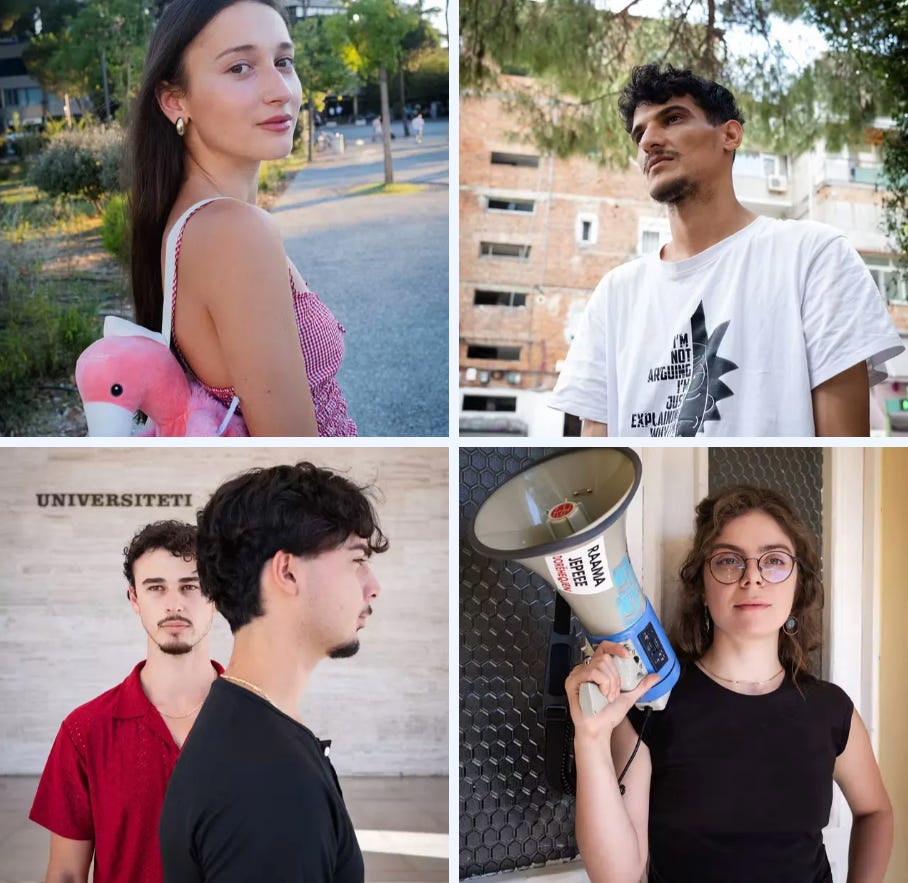
Albania’s “Flamingo Revolution” has stalled the Kushner resort on a protected coast. The Gen Z-led movement, the biggest since communism fell in 1991, with an estimated quarter of a million people flooding Tirana in June, has forced construction of Jared Kushner’s $6 billion luxury development on Sazan Island and the Narta Lagoon to a halt pending environmental review. Prosecutors are now investigating the underlying land deal itself. Le Monde / Foreign Policy