

This week’s top stories
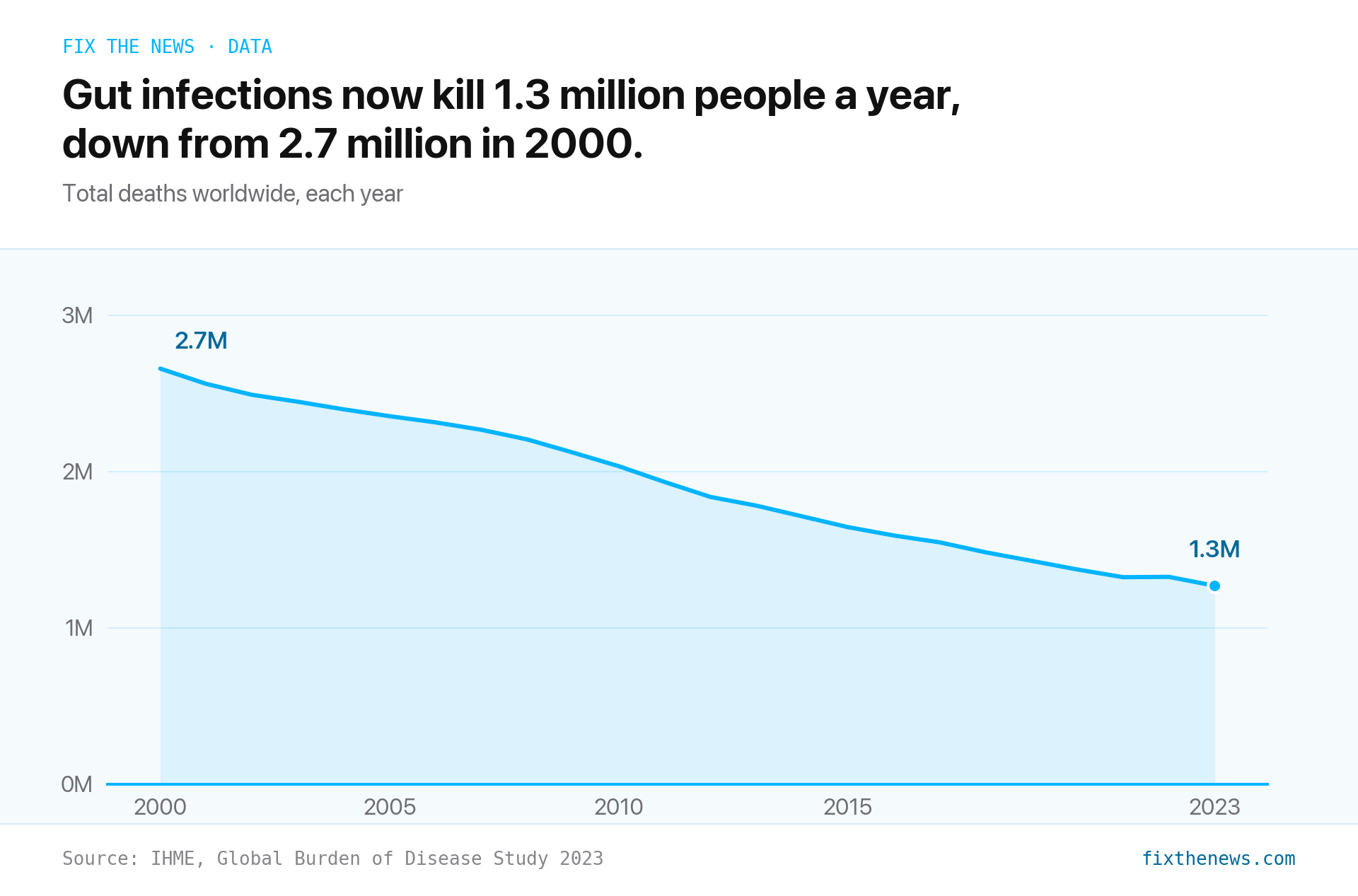
Deaths from diarrhoea and gut infections have more than halved in this century. Enteric infectious diseases (the faecal-oral infections behind severe diarrhoea) killed 2.66 million people in 2000. In 2023 that number was down to 1.27 million. Children under five still carry the heaviest load, but their toll has also fallen the fastest: diarrhoea killed 1.14 million kids a year in 2000; by 2023 it was down to 317,000. The Lancet
Ok hold on. Maybe your eyes glazed over there, which is fine, our fault for making the summary so bland. This story deserves more of our collective attention though, because it’s one of the best things that’s happened in our lifetimes and almost nobody knows about it.
Here’s another way of looking at it. At the beginning of the 21st century, diarrhoea was the world’s second biggest killer of young children, and a child under five had a roughly 1 in 550 chance of dying from it. Today those odds are down to around 1 in 2,000 and diarrhoea has fallen to the third biggest cause, behind pneumonia and preterm birth complications.
Nobody throws a parade for oral rehydration salts and running water, but they've cut the chances of a kid dying from the runs by more than two-thirds in a single generation. CIDRAP
A tetanus-diphtheria vaccine that doesn’t need a fridge has passed its first human trial. UK scientists reformulated a licensed shot using trehalose, the sugar that lets desert plants survive without water, keeping it stable for up to two years at 30°C. In a trial involving 60 adults it matched two approved vaccines on safety and immunity. Keeping vaccines cold is one of the single biggest obstacles to getting them into remote and fragile places; this could be a really big deal. Gavi
Lebanon’s parliament has voted to abolish the death penalty, putting it on track to become the first Middle Eastern country to formally end capital punishment. The bill now goes to President Joseph Aoun for signing. More than 78 people are on death row, and capital punishment would be replaced with hard labour, though the enforcement details are still unclear. BBC
First Nations win back the world’s oldest rainforest.
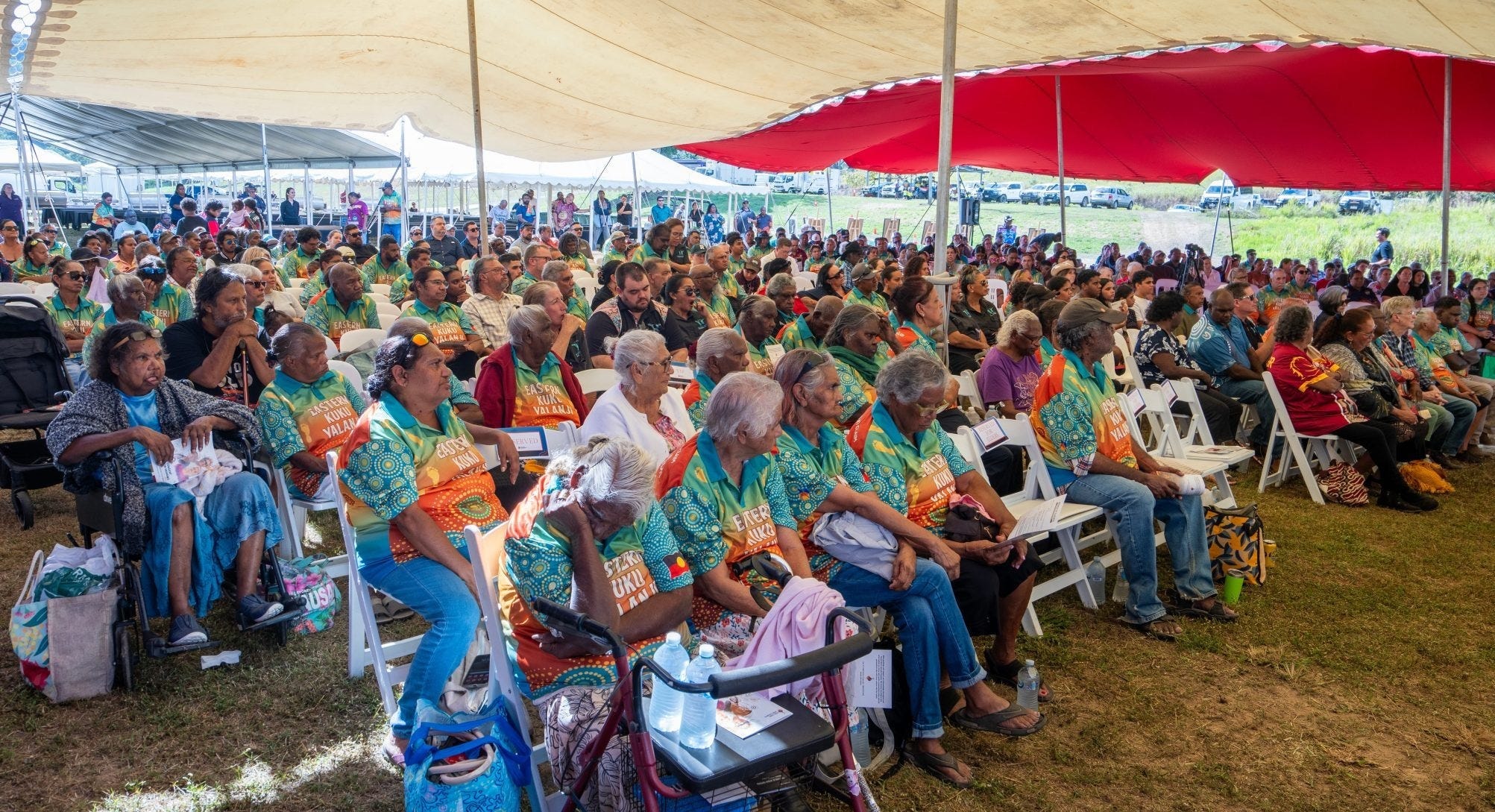
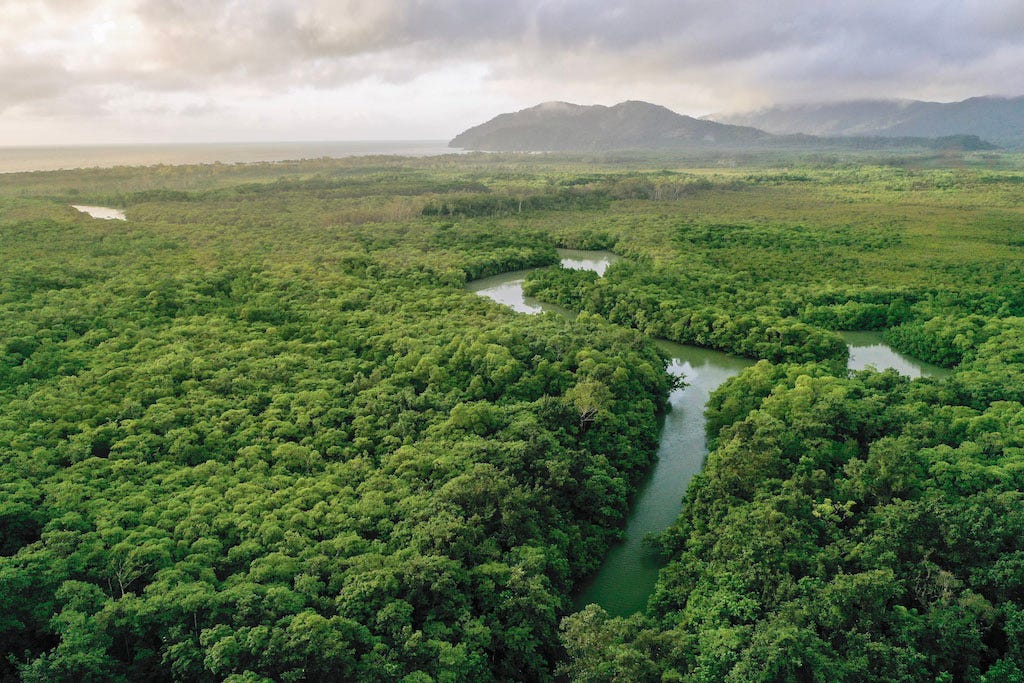
Last week, Australian courts recognised the Eastern Kuku Yalanji’s native title over a vast stretch of their ancestral Country in Cape York, including the remaining parts of the Daintree (Earth’s oldest surviving rainforest, 180 million years old). It’s the result of a decades-long process involving more than 100 family groups who joined forces to prove their claim. Two days later the neighbouring Western Yalanji won recognition over their ancestral land too. Together, the decisions cover 3,887 km², an area larger than Yosemite National Park. Cape York Weekly / National Indigenous Times
New energy vehicles made up more than 60% of China’s car sales in July, the first time the monthly figure has crossed that line. Their cumulative share of the market has now passed 50% too. Two in every three new cars sold last month were the kind you plug in first, rather than fill up, backed by a charging network that has grown to more than 23 million points nationwide. Xinhua
Malaria prevalence in Zanzibar has fallen from 40% in mid-2001 to 0.04% today. AI-guided drones are now mapping standing water in a few hours, a process that used to take health teams days. Once identified, these mosquito breeding habitats are mapped by GPS and targeted for immediate treatment with insecticide. Thus far, there have been no malaria deaths in Zanzibar in 2026, and the island is on the brink of eliminating the disease entirely. Streamline Feed
WE GOT A BIT CARRIED AWAY: Here’s a message we received from a reader about last week’s story on Africa’s new payments system.
“I have always looked forward to reading these emails. They have usually been simple, matter-of-fact reporting of progress that is being made and not otherwise emphasized in the traditional press. But importantly, they are usually free of negative editorializing, asides or censure.
So I was disappointed by the addition of the comment about banks getting their ‘grubby paws’ on money transfers in the squib about FX movements in Africa. I know banks are often maligned and viewed negatively by many, but it seems unnecessary to add this editorializing to the piece.
Do you even know whether banks are disproportionally charging for the risk they take in FX conversion? If so, maybe report on that. If not, why take the cheap shot? In my view, it lessens the impact of your reporting.”
Fair point. We updated the summary to reflect it.
Poverty is easing across Southeast Asia. Statistics Indonesia recorded 22.93 million people below the poverty line in March 2026, down from 23.36 million, pushing the national rate from 8.25% to 8.07%, with nearly every region improving. Java still holds more than half of the country’s poor. Next door, self-rated poverty in the Philippines fell to 49% in June from 52% in March, which the government credits to cash transfers including ₱5,000 payments to 1.8 million transport workers. Antara News / Manila Bulletin
Meet Rachel Ikemeh, the woman who almost single-handedly saved a species of primate. The Niger Delta red colobus was unknown to science until 1993 and lost 90% of its population within two decades, falling to an estimated 200 animals. Ikemeh’s community-led project, launched in 2013, now protects more than 80 km² and 16 threatened species, and its resident colobus population has doubled. This year she opened Nigeria’s first locally managed marine area. CNN
Your brain may age in a sudden lurch around midlife. The standard story is that our neurons and memory start fading slowly in our 30s. A new Science study of cells from 40 human hippocampi belonging to people in their 20s through to over 100, says something different. Most of the change is packed into a window between the ages of 50 and 75. In that stretch the brain’s original immune cells, present since before birth, give way to inflammatory cells from the blood. That’s the hopeful part; because the culprits arrive via the bloodstream rather than the brain itself, they might one day be intercepted there, a far easier place to get at than the inside of your skull. Eric Topol
Engineers building a solar farm near the Arctic Circle got used to hearing “Who the hell builds a solar plant in Lapland?” The Simo solar park now runs for almost 22 hours a day every summer (and in the winter snow reflecting light onto double-sided panels turns out to be a killer feature). Nordic investors added more new solar than wind for the first time last year, and Sweden and Finland have both hit their 2030 solar targets years early. Bloomberg


The EU has capped forever chemicals in food packaging. New rules in force from 11 August limit PFAS chemicals that are linked to cancer and kidney disease and are extremely persistent in the environment. The law also targets packaging waste, up more than 20% in a decade, and deposit-return schemes are coming, though the toughest waste targets don’t bite until 2030. Reuters
Canada has scrapped its ban on gay and bisexual sperm donors. Health Canada removed the screening questions that disqualified men who’d had sex with men within three months, after a donor sued in 2023. Doctors told the court that modern HIV testing carries “effectively no residual risk.” LGBTQ Nation
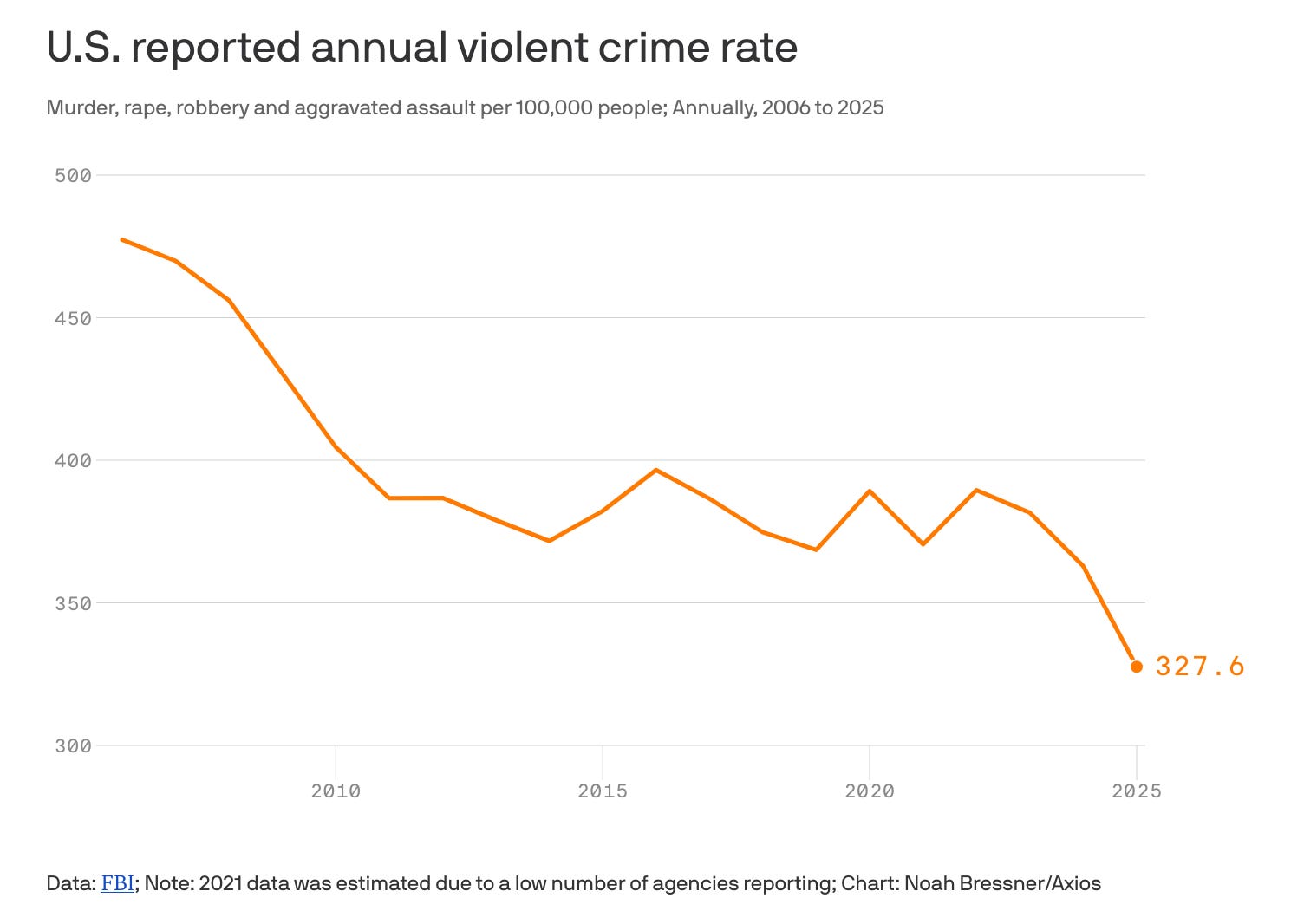
Last year, America’s violent crime rate saw its largest annual drop since the FBI began keeping national estimates in 1936. The decline was unusually broad, touching every population group, from the biggest cities to small towns, suburbs and rural counties. It started in 2022 under Biden and has continued under Trump. Not that anyone seems to care, but this means the United States is now a safer place to live in than at any point in its history. Axios
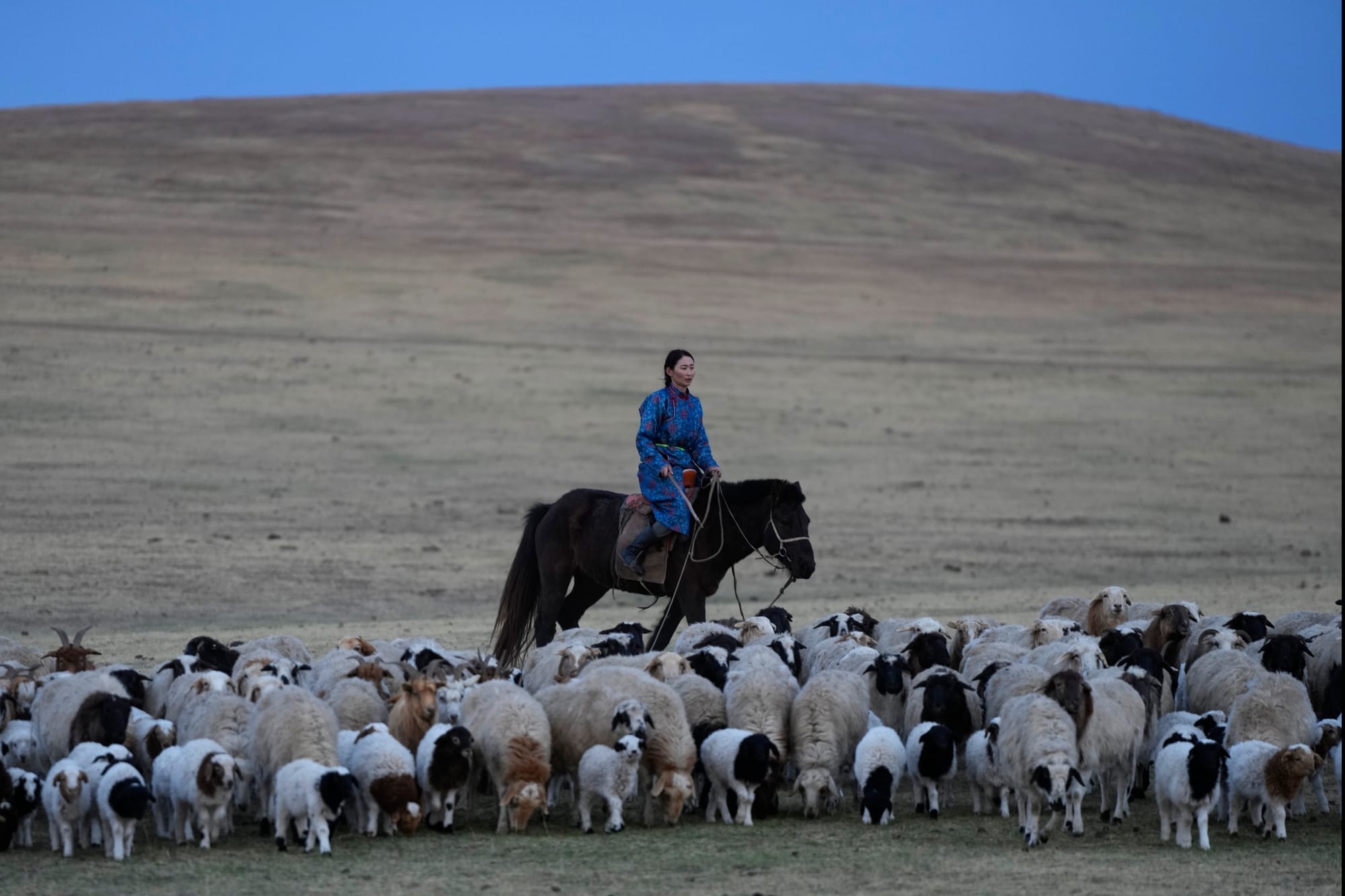
Uukhai! 2026 is the International Year of Rangelands and Pastoralists. Mongolian steppe nomads and Spanish shepherds may seem like modern anachronisms, but the FAO estimates there are at least 180 million pastoralists, ranging from South America to the Arctic, managing approximately one billion domestic animals on rangelands covering around half of Earth’s land area.
The data we have on them is shockingly bad: the International Livestock Research Institute (ILRI) says that rangelands are basically unmapped compared to the world’s forests. The World Resources Institute (WRI) uses Indigenous and community territory maps as a proxy for how much of the world’s rangelands are actually stewarded — but pastoralist-heavy regions like Central Asia and the Middle East are poorly covered.
The ILRI is battling the data deficit via the newly unveiled Global Rangelands Data Platform, which aims to integrate pastoralist territory data with rangeland extent. It’s slow going. In the interim, the WRI has continued running analysis and has some figures we can work from: pastoralists steward at least 44% of the world’s rangelands and, where they have secure land rights, keep that land remarkably ecologically intact. Only 8% of global losses between 2016 and 2024 occurred on rangelands with secure tenure — the other 92% happened elsewhere, mostly in areas where pastoralists lack legal recognition.
Filling the data gaps by cataloguing pastoralist groups (as the League for Pastoral Peoples is doing) and mapping the actual territories they graze, as the ILRI is starting to do, is a big step in the right direction. We should be doing a lot more to help the world’s pastoral people secure rights to the lands their animals graze — it’s a good solution!
Interested in going deeper? This 2023 Associated Press feature on nomadic communities in Senegal and Mongolia is extraordinary.
“The half-crescent moon glowed in the predawn Mongolia sky as Agvaantogtokh and his family began preparing for yet another big move with their animals.”
On the podcast this week…
Five years ago, the Taliban banned girls from the classroom. One school refused.
In August 2021, as the Taliban returned to power in Afghanistan, the staff and students of SOLA, the country’s first and only boarding school for Afghan girls, managed to escape to Rwanda, where they established a temporary campus to continue classes.
Shabana Basij-Rasikh, the co-founder of SOLA, was the first ever guest on our podcast back in 2023. Five years since the Taliban took over, she returns to reflect on what has happened since: from Afghan women running secret schools and girls using the internet to keep learning, to the graduation of SOLA’s first cohort, and what it means for Afghan girls have the freedom to simply be “girls who go to school.”